
You’ve never really seen Iceland if you haven’t seen its fishing industry at work.
Iceland is one of the few countries in the world whose identity, success, and worldwide significance are largely dependent on the sea. In a world where seafood economies rise and fall with unstable markets, climate-driven changes, and even political intervention, Iceland stands out, not because it avoided these problems, but because Iceland has dominated them. The country’s fishing industry is both admired and contested, hailed as one of the world’s most efficient seafood systems while simultaneously criticized for concentration, rural decline, and the social repercussions of privatizing a public resource. Whether one views it as a model or a warning, Iceland’s seafood industry is impossible to ignore.
This article shows how Iceland transformed from an impoverished island into a global seafood powerhouse, how the modern quota system works, which companies dominate the sector, and what challenges lie ahead. For shipbrokers, investors, and operators participating in the North Atlantic system, understanding Iceland’s model is essential, its fleets, companies, and regulatory approach have shaped the region’s commercial reality for nearly half a century.
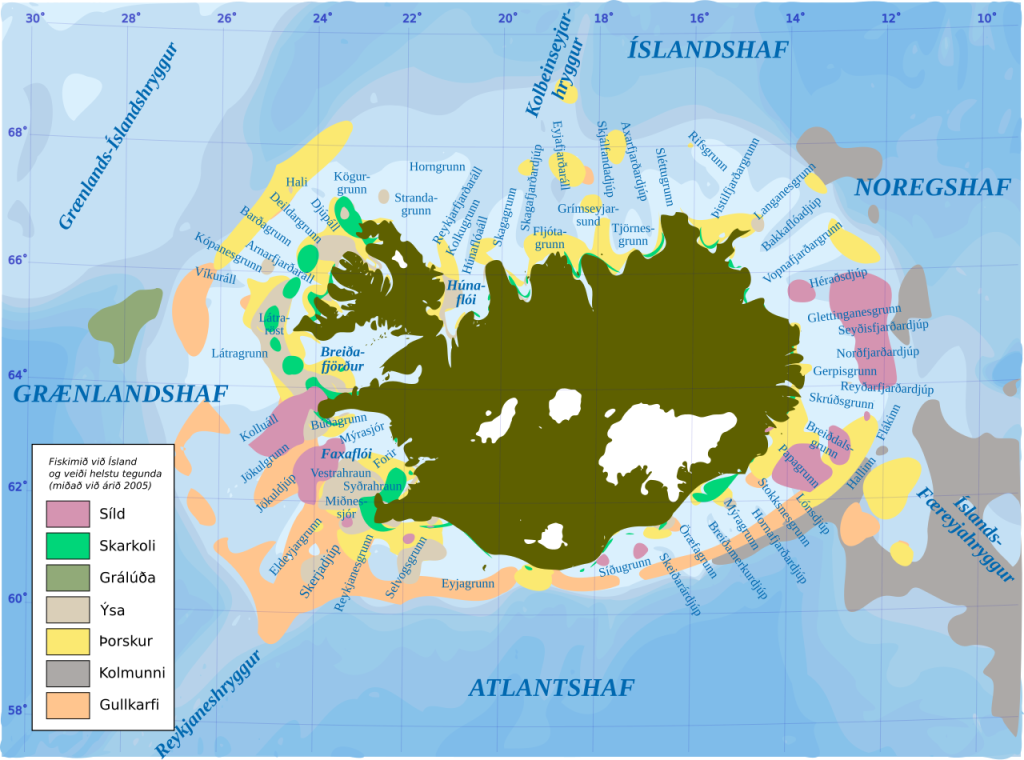
Iceland’s Brief History in Fishing Industry
For most of Iceland’s history, it heavily relied on its marine resources. “From the settlement of Iceland in the late 9th century until the 20th century, Iceland‘s economy rested on farming and fisheries. Since the 14th Century, fish products have been Iceland‘s most important export.” (Árnason, 2023). By the 18th and 19th centuries, fishing was no longer just subsistence, it had become a main livelihood to Iceland.
The modernization of fishing systems first happened in the 20th Century, where mechanization, first decked sailboats, and trawlers allowed them to push farther offshore and have larger catches. According to Icelandic economic histories (Agnarsson & Arnason, 2003; Agnarsson, 2015), this era marked the beginning of Iceland’s structural modernization, fishing provided foreign currency, paid for infrastructure, financed education, and gradually elevated living standards. The fleet became the engine driving national development.
The nation proved how vital fishery became through one of the geopolitical conflicts in its history; the Cod Wars. Iceland extended its Exclusive Economic Zone between the 1950s and 1970s, from 4 miles to 200 miles engaging with the United Kingdom in several confrontations that combined national resolve, maritime brinkmanship, and diplomacy. Iceland turned out victorious, securing control of waters that would sustain them for generations.
This victory laid the foundation for Iceland’s modern fisheries governance system, and it protected the resource that would power the country through its economic and political transformations of the late 20th century.
How Iceland Became a Global Seafood Powerhouse
Iceland’s rise in the global seafood economy is often portrayed as a product of natural abundance, but that explanation is incomplete. Some of the most profitable fisheries in the world are supported by cold, nutrient-rich waters, while it is true, many nations with similar waters do not achieve the same results as Iceland. What makes Iceland truly distinctive is the intersection of its geography, political decisions, technological innovation, and business consolidation.
According to Gunnlaugsson and Saevaldsson (2016), after the Icelandic fishing industry had gone through many drastic changes due to developments in market, technology, and other factors, companies since then had become larger and more of them had covered most, if not, all stages of the value chain. They are “involved in fishing, processing and marketing and are vertically integrated, thus maximizing value creation and profitability.” An advanced processing sector emerged, with companies pioneering filleting, freezing, and later fresh-chilled export logistics that enabled Icelandic fish to reach European markets in mere hours.
The nation adopted scientific management before many of its peers. Influential economists and policymakers recognized that Iceland’s economy was ‘uniquely’ vulnerable to stock collapse, a point emphasized by Kristinsonn (1987) decades before the modern sustainability narrative took hold. When the herring stock collapsed in the late 1960s, it shook the economy and reinforced the need for structured management systems.
Individual Transferable Quota (ITQ) was then introduced in the early 1980s and was fully implemented in the 1990s. It is arguably the most influential policy in Icelandic Fishing Industry history as it became the backbone of its modern seafood economy and is still studied worldwide. The nation implemented a fisheries quota that restricts the overall catch to 25% of the projected stock of species (based on the company’s historical catch performance). Environmentalists have highlighted the country as an example of what a sustainable fishing industry can look like.
This move drastically transformed the fishing industry, creating efficiency, reducing overharvesting, and enabling companies to scale. However, it triggered debates over fairness, ownership concentration, and the social cost to rural communities but one thing is certain, the ITQ system played a central role in Iceland securing its status as a global seafood powerhouse.
The Modern Icelandic Seafood Industry
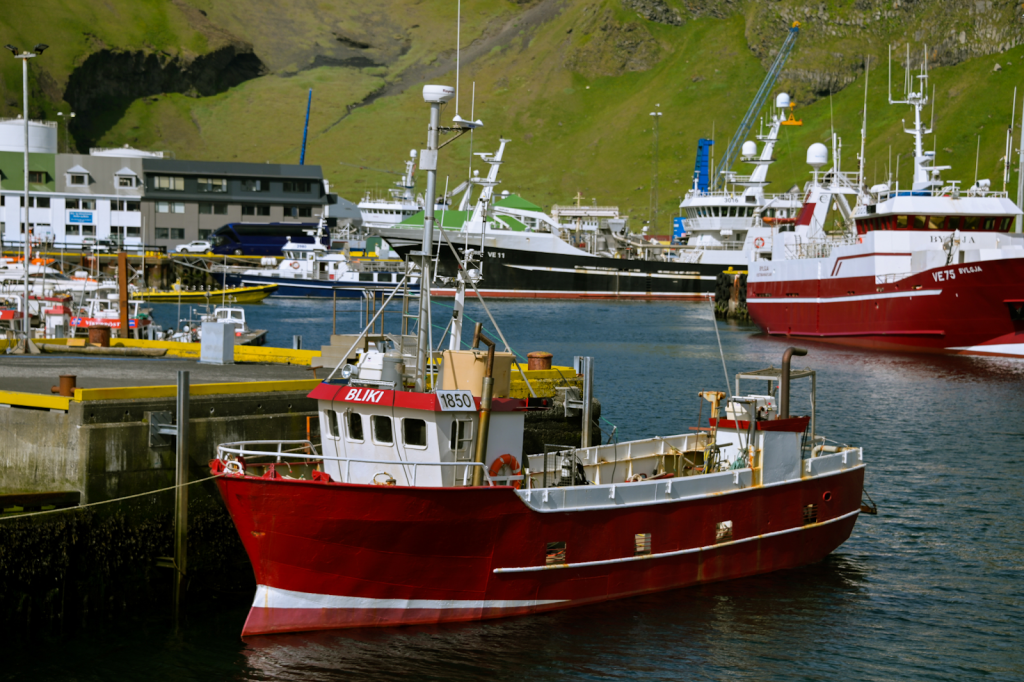
Iceland’s fishing and processing systems today are technologically advanced, vertically integrated, and export-oriented. While small independent vessels still exist, the industry is dominated by a lot of large firms operating modern fleets, high-capacity processing plants, and international distribution channels.
The prevailing model is integration, from catching to processing to exporting. Companies like Brim, Samherji, Síldarvinnslan, and Vinnslustöðin operate not only trawlers and pelagic vessels but also some of the country’s most sophisticated processing facilities. These firms utilized automation, data-driven optimization, and logistical precision that enabled Iceland to command premium prices in European and global markets.
“Iceland has been an important exporter of seafood for many years. The country is one of the largest producers and exporters of seafood in the world. In Europe, it is among the top three.” (Swapp Agency) Fresh fish logistics are a specialty. Iceland’s exporters can transport fillets to major European hubs within 24–48 hours, a capability that transformed export strategies in the 2000s and remains central to market success. Pelagic products, herring, mackerel, blue whiting, are processed in high-volume plants located in ports built around large factory vessels and freezing infrastructure. Groundfish, particularly cod and haddock, remain Iceland’s flagship species, forming the backbone of its export value.
The system operates under close monitoring. The Marine and Freshwater Research Institute issues stock assessments, which inform annual TACs (Total Allowable Catch) set by the government. For decades, this model has been praised for stability, though disputes over specific TAC decisions and economic impacts continue to surface.
What stands out about the modern industry is its combination of scale and adaptability. “The extensive research of stocks and managing catch sizes with the setting of quotas has ensured a responsible fishing industry exists and respects the sustainability of the ocean’s natural resources.” (Árnason. 2023)
Icelandic companies have not only united domestically but expanded internationally, operating trawlers in other countries, acquiring foreign quota shares, and forming joint ventures across the North Atlantic. This expansion aligns with Iceland’s fishing culture, bold, entrepreneurial, and continuously pushing beyond its own shores.
Structure, Transferability, and Controversies
The ITQ system assigns quota shares (percentages of each species’ total authorized catch) to firms and boats. These percentages are converted into operational quotas based on scientific TAC levels every year. The ability to purchase, sell, or lease quota shares which allows efficient operators to scale and others to exit.
Transferability and Consolidation
According to research by Gunnlaugsson and Saevaldsson (2016), the transferability of quotas made a large financial incentive for operational efficiency. Over time, this encouraged mergers and acquisitions, resulting in significant consolidation. By the 2000s and 2010s, a small number of companies controlled a substantial share of quota holdings. Studies by Agnarsson, Matthiasson, and Giry (2016) document this distribution, noting that consolidation has increased steadily over the past two decades.
Regulations and Restrictions
Several restrictions regulate the market, no company should hold more than the total quota allocated, companies must adhere to landing requirements, and small-boat fisheries are partially insulated from full consolidation. Nevertheless, critics argue that socioeconomic protections are insufficient. Community dependence on quota access remains a contentious issue, particularly in rural fishing towns where quota outflows have contributed to depopulation. (Kokorsch & Benediktsson, 2018)
Social Debate: Who Owns the Fish?
This question lies at the heart of Iceland’s political discourse. Many view quota privatization as an economic necessity that saved the industry from collapse, while others see it as the transfer of public wealth into private hands. Jim Harper’s 2012 analysis called the system “split-personality”, efficient yet socially divisive. The debate continues today, intensified by recent controversies over fishing fees and quota valuations (McBride, 2025).
Whether admired or criticized, the ITQ system is inseparable from Iceland’s economic transformation. It shaped Iceland’s corporate landscape, became the foundation for the country’s modern seafood dominance, and influenced every maritime village in the country.
Although the Icelandic economy has diversified through tourism, energy, and technology, fisheries remain deeply influential. Seafood once accounted for up to 80 percent of Icelandic export earnings in the mid-20th century. Today it represents roughly 35–40 percent of export value, still a massive share for a developed economy.
Gunnlaugsson and Saevaldsson (2016) highlighted that financial performance in the ITQ era improved significantly, with reduced fleet size, higher output value, and increased profitability. Icelandic companies consistently report strong margins due to vertical integration, advanced automation, and optimized markets.
Iceland’s seafood industry still is one of the most dependable economic cornerstones during downturns, such as the 2008 financial crisis, providing foreign revenue when other businesses shrank. It continues to be one of Iceland’s most powerful export drivers today and a vital component of the country’s economic stability.
Profiles of Iceland’s Major Seafood Companies
Iceland’s seafood industry has a handful of powerful, vertically integrated companies that control significant quota shares and anchor the country’s global competitiveness.
Brim: One of Iceland’s largest seafood companies, operating modern vessels and processing plants. Strong in both groundfish and pelagic species with a focus on efficiency and high-value exports.
Síldarvinnslan: A major pelagic powerhouse based in Neskaupstaður. Specializes in herring, mackerel, and blue whiting, supported by large-scale freezing and processing operations.
Ísfélag: Historic Westman Islands company with a balanced portfolio of groundfish and pelagic catches. Known for stable operations and strong community ties.
Vinnslustöðin: Key Westman Islands operator focused on premium-quality groundfish. Runs advanced processing plants and plays a central economic role in the region.
Samherji: Iceland’s most internationally active seafood group, with significant domestic quotas and operations abroad. Influential in processing and exports, and a major player in consolidation debates.
A Nation Still Powered by the Sea
Although the Icelandic economy has diversified through tourism, energy, and technology, fisheries remains the powerhouse of the country. In the mid-20th century, seafood used to make up as much as 80% of Iceland’s export revenue. Today, it currently accounts for between 35 and 40 percent of export value, which is still a significant portion for a developed economy.
The industry’s productivity is remarkable. Gunnlaugsson and Saevaldsson (2016) highlight that financial performance in the ITQ era improved significantly, with reduced fleet size, higher output value, and increased profitability. Icelandic companies consistently report strong margins due to vertical integration, advanced automation, and optimized markets.
The seafood industry continued to be one of Iceland’s most dependable economic cornerstones during economic crises such as the 2008 financial crisis, providing foreign revenue when other businesses shrank. Today, it remains one of Iceland’s strongest export engines and a crucial contributor to economic resilience.
Challenges Facing the Icelandic Seafood Sector
Despite its strengths, Iceland’s seafood industry still faces several challenges that will shape its future direction.
Climate Change and Stock Uncertainty
The North Atlantic is warming, and key species such as mackerel and capelin have changed migration patterns. This volatility challenges stock assessments and can create diplomatic tensions with neighboring countries. (Stenevik & Sundby. 2007)
Political Pressures on the Quota System
Fishing fees, quota distribution, and company influence remain political flashpoints. Recent disputes highlighted by McBride (2025) illustrate how contentious quota valuation and fee structures have become. Calls for redistribution or new taxation continue to surface.
Rural Depopulation and Social Divide
As documented by Kokorsch and Benediktsson (2018), quota shifts have contributed to uneven regional development. Many small communities worry that continued consolidation may further diminish their economic base.
Dependence on a Limited Resource Base
While the economy has diversified, fisheries still play an outsized role. Any major decline in key species would cause national implications, as Kristinsonn (1987) stated decades ago.
These conflicts faced by Iceland required strategic adaptation, yet Iceland has historically excelled at navigating change, a strength that will remain crucial.
Iceland in the Global Seafood System
Iceland’s seafood industry is a remarkable case of national strategy, history, and economic evolution. From its early reliance on stockfish to its battles in the Cod Wars, from the collapse of herring to the creation of the ITQ system, Iceland has repeatedly reshaped its fishing industry. Today, the fishing industry in Iceland is currently among the most developed worldwide. High-value goods including fresh cod loins, special cuts, and prepared foods for European shops are the main emphasis of processing facilities.
However, its success is complicated as well. Efficiency came with social tradeoffs. Consolidation brought success to some regions and conflicts to others. Privatization created global admiration but it also brought controversy. The industry stands as both a model and a mirror, showing how natural resource dependence can transform a nation while also exposing the tensions such dependence creates.
For the global seafood industry, for shipbrokers, investors, and operators across the North Atlantic, Iceland represents a benchmark. Its companies set standards for fleet modernization. Its quota system influences policy debates worldwide. Its adaptive strategies shaped regional markets. Additionally, its continuous development teaches us how to maintain a balance between sustainability, profitability, and responsibility.
Despite the country’s size, Iceland has made a huge influence on marine governance and trade. Iceland will continue to be discussed as long as fish are essential to the world’s food supply and trade.
– Shipbroke.is
Comments