
Denmark does not appear to be a maritime powerhouse. Its seafood industry rarely makes headlines, its fishing fleet looks disciplined instead of being dominant, and its shoreline is small when compared to countries that face the ocean. Behind this calm appearance, however, is one of the world’s most advanced, powerful, and capital-intensive fish enterprises. Denmark created a system that integrates ships, quotas, processing, technology, and exports, transforming a small country into a major factor in the seafood industry with a huge influence throughout the North Atlantic and beyond.
For shipowners, investors, processors, and brokers operating in the North Atlantic system, Denmark is not simply a fishing nation. It serves as a model for organizing seafood, ships, and regulations into a high-performing industrial ecosystem.
Denmark’s History: From Coastal Fishing to Industrial Leadership
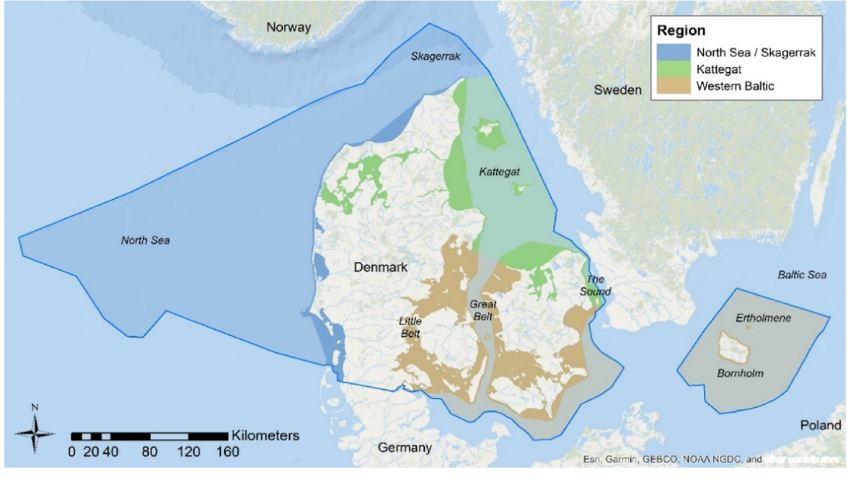
Denmark’s rise towards success in the fishing industry heavily relied on practicality and geography. The Danish fishing village, which is located between the North and Baltic Seas, commonly thrived on herring, cod, plaice, and some later industrial species like sand eel and sprat. Fishing, at first, was a small scale with communities influencing it, along with the short trips and seasonal trends. However, Denmark stood out for its adaptability rather than volume.
Danish operators quickly moved toward productivity, fleet modernization, and export-oriented production as fish stocks changed and European markets grew. Denmark started transitioning from dispersed coastal fishing to a system based on fewer, more capable vessels combined with industrial processing capability by the middle of the 20th century.
Early in the 20th century (1904–1907), the country’s first major fishing port was built at Skagen, packed with ice processing and storage facilities that would serve as the foundation for Danish pelagic operations for decades to come. This was an indication of the industry’s growing commercial dedication.
Denmark transitioned from traditional coastal fisheries to a more industrialized fleet system in the mid 20th century. By the 1960s and 1970s, Danish ships were able to go farther and supply better-quality harvest to growing European markets because of investments in bigger trawlers and refrigeration equipment. “In addition to creating new opportunities in fishing for human consumption, the new trawl technique marked the start of a new fishing segment – industrial fishery, where other fish species are fished for feed production” (Thyboron Port).
The Danish industry accepted regulation rather than resisting it. As a result, the number of fleets was gradually reduced, fishing rights were quickly established, and financially stable operators who could invest in downstream processing, onboard technology, and vessels emerged. Denmark did not grow by catching more fish. It grew by catching fish better.
How Denmark Became a Seafood Powerhouse
A turning point came with Denmark’s integration into the European Community, later the EU. Beginning in the 1980s and solidifying in the 1990s, Common Fisheries Policy (CFP) quota regulations prompted Denmark to change its fleet and management practices. Many traditional fishermen experienced financial challenges as a result of collective catch restrictions, which was initially set in place to stop stock depletion. As a result, they had to change from a fleet of hundreds of small boats to fewer, larger, and more effective ones.
In the early 2000s, Denmark took a huge step by introducing an Individual Transferable Quota (ITQ) system, initially targeting the pelagic segment. “The introduction of the ITQ system led to a rapid concentration of quotas. Many fishermen sold out” (research4committees). A ten-year reference period was used as the basis for allocation. Due to overcapacity, the Danish pelagic fleet shrank from 100 ships to 20 after the ITQ system was implemented.
But rather than managing quota collectively, rights were bound to individual vessels and could be transferred or leased. This market-oriented approach enabled the Danish fishing industry to consolidate, shed excess capacity, and invest in modern fleets that remain among the most efficient in Europe. Even though consolidation decreased the number of operational vessels, it enhanced the total landings value and expedition viability for operators investing in quality and cold-chain logistics.
The ITQ system “saved the sector”. The industry is now more stable. For some time now, the industry has been increasingly profitable, and the return on investment is quite rapid. In the 21st century, Denmark established itself as a global center for seafood commerce, technology, processing, and sustainable practices in addition to being a fishing nation.
The Modern Structure of Denmark’s Seafood Industry
Today, Denmark’s seafood sector is an extensive network that includes aquaculture technology, harvesting, processing, marine ingredients, logistics, and exports. “Fishing harbours throughout Denmark carry out pelagic fishing” (The Intl) with herring and mackerel accounting for the majority of catches, while demersal fisheries focus on cod, plaice, saithe, and other whitefish species. Fishmeal and fish oil factories, which serve the world’s aquaculture, livestock, and nutraceutical sectors, are supplied by industrial fisheries.
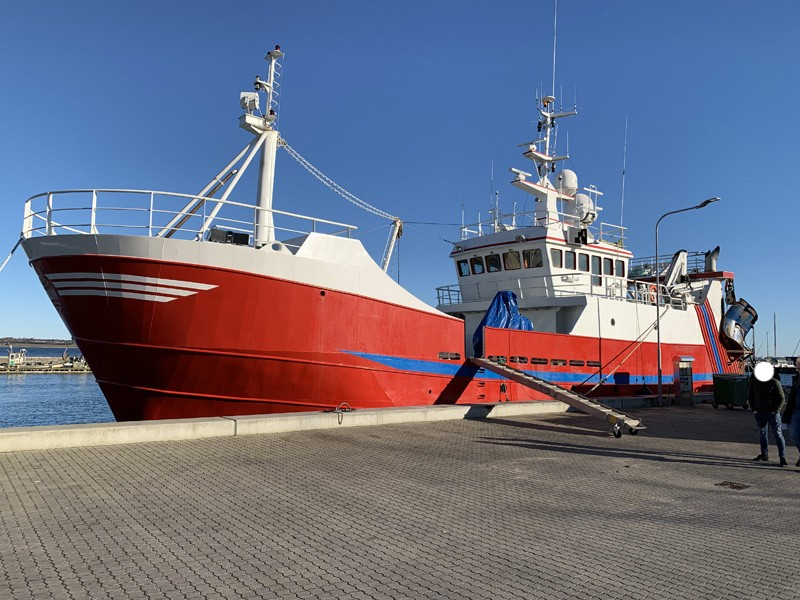
Denmark stands out for its integration of land-based infrastructure and warships. Large pelagic vessels often have connections directly to ingredient or processing facilities, guaranteeing consistent flow and predictable prices. Danish aquaculture suppliers are global leaders in technology and solutions for both land-based and marine fish farms according to The International. Processing hubs such as Skagen, Hanstholm, Thyborøn, and Hirtshals act as logistical arteries where landings, freezing, value-added processing, and export converge seamlessly.
Denmark is also a global leader in fisheries. Fleets all over the world use netting systems, onboard handling equipment, monitoring sensors, and sustainability tools that are designed and exported by Danish companies. The domestic fleet’s competitiveness is reinforced by this technical system, which creates parallel export revenue independent of catch volume.
The structure of the sector promotes long-term planning, capital discipline, and size. Smaller operators still exist like in coastal and niche fisheries, but a small number of large, quota-rich companies that run cutting-edge fleets that are efficient and compliant hold the majority of the market.
Transferability and Control
One of the main reasons for Denmark’s success is its Individual Transferable Quota system. Denmark permits quotas to be purchased, sold, and leased under specified guidelines, contrary to strict national distribution schemes.This has transformed fishing rights into financial assets, encouraging consolidation among operators best equipped to use them efficiently.
Quota ownership is species-specific and subject to concentration limits, but the system remains one of the most flexible in Europe. Large vessels are able to operate at high utilization rates and maintain profitability even during market instability because pelagic quotas, in particular, are highly consolidated.
This transferability had two major effects. It first decreased overcapacity by allowing less productive operators to leave the market with compensation rather than going out of business. Secondly, it brought investment. Quotas turned into bankable assets, enabling vertical integration into ingredients and processing, fleet renewal, and vessel improvements.
While others argue that quota consolidation has separated ownership from coastal communities, Denmark’s strategy has produced stability from an industrial perspective. Investment cycles are long-term, fishing effort is predictable, and operational planning is closely associated with regulatory compliance.
Economic Significance and Global Reach
Denmark consistently ranks among the world’s leading exporters of fish and seafood products relative to population size. Tens of thousands of direct and indirect jobs are supported by seafood exports, which bring in billions of euros every year. The industry makes significant contributions to the GDP of the country, especially in northern coastal areas where local economies depend heavily on fisheries.
Value density is what makes Danish seafood economics so appealing. Denmark pioneers in high-value frozen fillets, consumer-ready products, marine ingredients, and innovative processing outputs rather than only low-margin bulk exports. Fishmeal and fish oil exports, driven by industrial fisheries, are integral to global aquaculture supply chains, giving Denmark influence far beyond its own waters.
The export footprint spans in the European Union, Asia, North America, and emerging markets, supported by world-class cold chain logistics and a reputation for reliability. This economic stability translates into stable vessel demand, consistent trade flows, and long-term asset utilization for shipbrokers and maritime financiers.
Major Companies in Denmark That are Shaping the Market
Denmark’s seafood sector is defined by a small number of dominant companies with global operations. Despite being owned by Greenland, Royal Greenland has strong operational relations with Denmark and is an important participant in the markets for cold-water shrimp and whitefish. Vessels, processing, and international distribution are all part of its vertically integrated operation.
Another major component of the Danish business is Polar Seafood, which processes a variety of species with a focus on pelagic and whitefish. The company is one of the most significant companies in Northern European fisheries due to its size, quota holdings, and global reach.
Espersen represents Denmark’s strength in value-added processing. As one of the leading global supplier of consumer goods and frozen fish portions, Espersen is a prime example of how Denmark generates value downstream rather than relying solely on exports of raw materials.
Alimex serves a crucial role to the pelagic industry because it connects worldwide markets with catching activities. Technology companies like OxyGuard, which supply monitoring and control systems utilized in international aquaculture and fisheries operations, reflect Denmark’s leadership beyond harvesting.
All of these businesses show a characteristic of the Danish model, control goes beyond the vessel’s rail. The integration of ownership, processing, logistics, and technology increases resilience throughout the value chain.
Consolidation and Ownership Dynamics
In Denmark’s fisheries, consolidation is a structural characteristic instead of being an unintended result. Over the past two decades, quota ownership has increasingly focused among financially strong companies capable of meeting regulatory, environmental, and capital requirements. As a result, there are now fewer vessels, but those that now do exist are bigger and more productive.
In order to maintain effective management while preserving continuity, ownership structures frequently incorporate corporate governance with family control. Acquisitions have focused on securing quota access, processing capacity, and market reach rather than speculative growth.
While consolidation has improved economic efficiency, it has also sparked political and social debate. The conflict between industrial optimization and social equity is reflected in the ongoing concerns about transparency, quota concentration, and trust within industry organizations. Denmark continues to improve governance methods to balance these conflicting interests without undermining the major key strengths.
Sustainability and Regulatory Leadership
Denmark considers itself as a global leader in sustainable fisheries management, and not without reason. The regulatory system is supported by strict enforcement, real-time monitoring, and scientific stock assessments. Danish fleets are among the first to use fuel-efficient vessel designs, selective equipment, and computerized monitoring.
Additionally, the nation has been active in influencing EU fisheries policy, promoting data-driven management and more solid control mechanisms. Denmark’s overall performance is still in line with long-term resource stewardship, despite disagreements, especially on quota allocations and stock assessments.
The focus on sustainability is both economic and environmental. Asset values, quota pricing, and long-term vessel deployment are all supported by stable stocks, making sustainability a business requirement rather than a marketing strategy.
Challenges Facing the Danish Model
Despite its strengths, Denmark’s seafood industry faces mounting challenges. Climate change is affecting stock distribution in the North Atlantic, complicating quota negotiations and fleet planning. Even for effective operations, rising gasoline prices put pressure on margins. Administrative burdens and compliance costs are rising due to the ongoing complexity of regulations.
Social legitimacy remains a difficult conflict. As ownership consolidates, maintaining trust between industry, regulators, and coastal communities is important. The next stage of the industry’s growth will probably be shaped by transparency in quota transactions and governance.
Lastly, the level of global competition is increasing. Though Denmark is among the leaders in efficiency and technology, there are still long-term strategic concerns that need to be addressed regarding seafood consumption and pricing due to new producers and alternative proteins.
Why Denmark Matters to the North Atlantic Maritime Economy
Denmark is neither the loudest nor the biggest fishing nation. Its influence stems from system design, which is significantly more effective.Denmark has established a strong, export-driven, and globally significant seafood ecosystem by incorporating quotas, capital, technology, and processing into an efficient industrial model.
For shipbrokers and stakeholders across the North Atlantic, Denmark represents opportunity. Its manufacturing facilities rely on dependable marine logistics, its fleets need specialized boats, and its international trade flows regularly generate a demand for shipping and brokerage expertise.
It takes more than fish to understand Denmark. It tells the story of how a country turned its natural resources into a disciplined, strategic maritime business, and how that model will continue to shape the seafood industry in the North Atlantic system for decades to come.
– Shipbroke.is
Comments