
A group of islands that is constantly exposed to extreme gusts of winds in the middle of the North Atlantic might or could not be the first thing that comes to each person’s mind when most of them think of a seafood powerhouse. But Faroe Islands, a small independent archipelago located between Iceland, Norway, and Scotland, still outperforms their peers in terms of global fish production. “Although the fishing industry continues to lead the way, the Faroese business sector is becoming increasingly varied and competitive to partially ease the dependency on fishery.” says Visit Faroese Islands. Despite this, fishing and aquaculture still remains the islands’ major contributor of income and identity, and their work has helped feed millions of people around the world.
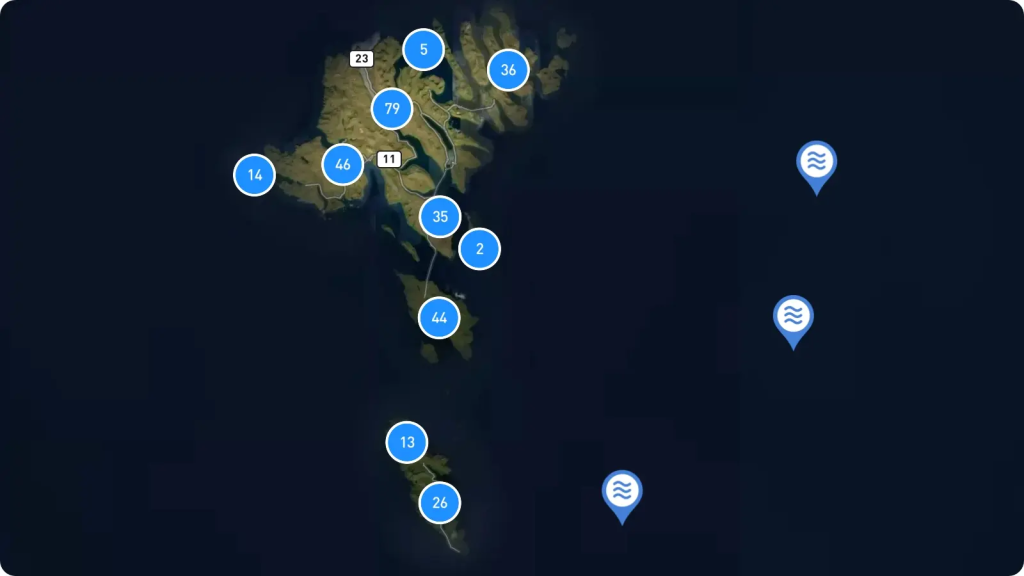
History: How the Nation Became a Seafood Powerhouse
The story of the Faroe Islands began long before the modern fishing fleets and export markets as you know as of today, was established. Norwegian farmers showed up in the islands of Faroese in the ninth century, subsisting on sheep, seabirds, and fish taken from the rough waters surrounding the islands. As time went on, the Faroese tied a cultural connection to its very own waters, building strong boats, complicated net-making abilities, and age-old preservation techniques that allowed them to live in one of Europe’s most remote locations.
But it was only in the late 19th and early 20th centuries that Fishing became the main source of income for the Faroe Islands. “Fish and fish products – including farmed fish – represent between 90 and 95 percent of total export value, and around 20 percent of the GDP” (faroeislands.fo). Developments in boat manufacturing, preservation methods such as freezing and smoking, and the development of their international market ties transformed the Faroe Islands into a country where fishing was not just a way of life, but also became the foundation for economic survival and growth. The islands’ location, where warm Gulf Stream currents meet freezing Arctic waters, lead to an ocean rich in cod, haddock, herring, mackerel, and blue whiting, all of which became staples of Faroese exports.
As steam trawlers followed by diesel engines replaced sail, Faroese fleets explored reaching into the North Atlantic waters, establishing fishing grounds outside their coastal shelf. By the mid-20th century, their fishing industry had evolved and was recognized as a well-known national sector with strong cultural roots and global influence.
Modern Seafood Industry: Current System Structure
Today, few places on Earth are as reliant on the water as the Faroe Islands. Despite a population of around 50,000 people, their seafood industry ranging from wild catch fisheries to world-class aquaculture accounts for a staggering portion of the national GDP. Seafood products represent between 90 percent and 95 percent of total export value, forming the backbone of the islands’ open economy according to the government of Faroe Islands.
This industry is about more than just fishing off the coast. The current Faroese seafood system is an integrated system that is interconnected between fishing fleets, processing factories, export hubs, research institutions, and regulatory authorities that all work together, especially the government of Faroe Islands that devotes enormous resources to ensuring that fish populations are used responsibly and sustainably. “This is administered through an effort based regulatory system, managed by the Ministry of Fisheries on the basis of national and international scientific advice” (faroeislands.fo), with the aid of Faroese Marine Research Institute that works on scientific assessments to help guide quota decisions and long-term stock health, and cooperation with international organizations such as the International Council for the Exploration of the Sea (ICES) which strengthens a science-based approach to fisheries stewardship
Two major segments drive the industry, catch fisheries and aquaculture. Wild fisheries capture cod, haddock, saithe, mackerel, herring, and blue whiting from both Faroese and international stocks in accordance with contractual agreements. Meanwhile, aquaculture, particularly salmon farming, has grown into a highly productive and internationally competitive industry. For many years, salmon and other aquaculture products have accounted for over half of total seafood export value.
To support this highly complex industry, the government of Faroe Islands and private sectors have made substantial investments in infrastructure, including innovative processing plants, high-capacity cold storage, auction houses, and logistical systems that ensure catches will reach international markets in top condition.
Quota System: Transferability, Species Composition, Restrictions
Maintaining the richness of the sea goes more than just capturing fish, it involves how those fish are managed. The Faroe Islands have a sophisticated quota and effort management system to sustain fish fisheries while promoting economic activity. At its core is a legal principle: “all living marine resources are the ‘property of the Faroese people’.” (Bui Tyril, 2018, Tough in the Making: Fisheries Reform Adopted)
The current system assigns fishing rights using a government structure that guarantees sustainability, transparency, and fair access. Unlike systems in which individual vessel owners directly own quotas, the Faroese method puts quotas in a more collaborative and regulated public setting. Fishing rights are not private property, they must be approved and periodically reallocated through procedures such as public auctions and competitive distribution. Annual catch limits (quotas) are set based on scientific evaluations and then adjusted to reflect stock status and international negotiations.
This quota regime applies to major species such as Atlantic mackerel, herring, blue whiting, cod, haddock, and saithe, and it is supported by an effort-based fishing days system for mixed stocks, which adds another layer of control where fixed quotas may not be effective. According to the Act on Fisheries Resources, “discards are prohibited or illegal”, forcing every catch, including byproducts, to be brought ashore to optimize utilization and reduce waste.
Importantly, recent fisheries reforms have included limits on quota concentration, public auctioning of a certain amount of key species quotas, and special allocations for innovation and development initiatives, all with the goal of balancing sustainability and economic stability. These policies just shows the Faroese determination to preserving the resource base while maintaining fair and competitive access for industrial companies.
International agreements also influence quota access. For many years, the Faroe Islands have engaged in bilateral quota swap arrangements, especially with Russia, which allow Faroese vessels to fish cod and other groundfish in the Barents Sea (just north of Russia) in exchange for quotas in Faroese seas. The conditions of these agreements between the Faroe Islands and other countries are renegotiated annually to reflect both biological assessments and geopolitical developments.
A group of islands that is constantly exposed to extreme gusts of winds in the middle of the North Atlantic might or could not be the first thing that comes to each person’s mind when most of them think of a seafood powerhouse. But Faroe Islands, a small independent archipelago located between Iceland, Norway, and Scotland, still outperforms their peers in terms of global fish production. “Although the fishing industry continues to lead the way, the Faroese business sector is becoming increasingly varied and competitive to partially ease the dependency on fishery.” says Visit Faroese Islands. Despite this, fishing and aquaculture still remains the islands’ major contributor of income and identity, and their work has helped feed millions of people around the world.
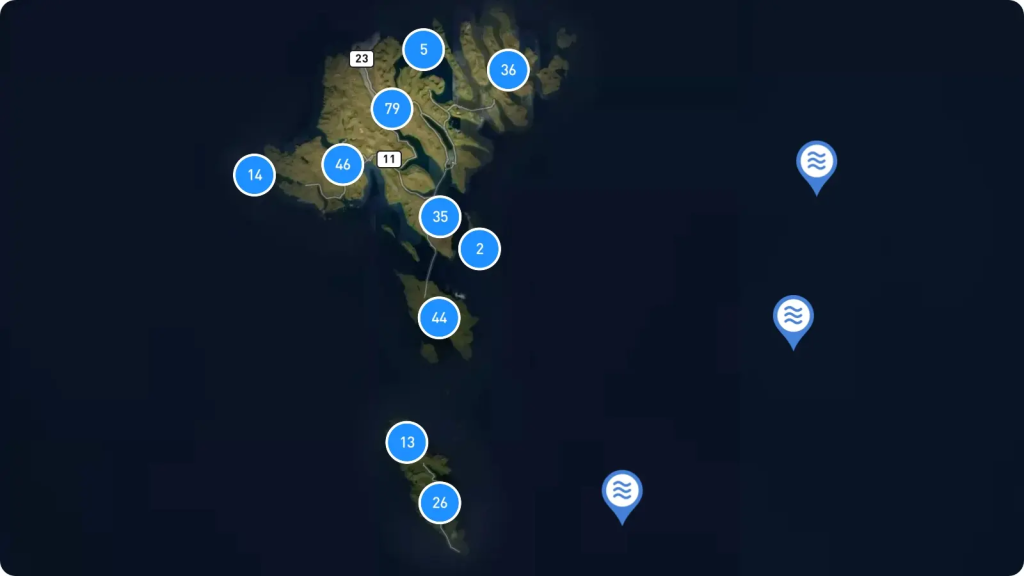
History: How the Nation Became a Seafood Powerhouse
The story of the Faroe Islands began long before the modern fishing fleets and export markets as you know as of today, was established. Norwegian farmers showed up in the islands of Faroese in the ninth century, subsisting on sheep, seabirds, and fish taken from the rough waters surrounding the islands. As time went on, the Faroese tied a cultural connection to its very own waters, building strong boats, complicated net-making abilities, and age-old preservation techniques that allowed them to live in one of Europe’s most remote locations.
But it was only in the late 19th and early 20th centuries that Fishing became the main source of income for the Faroe Islands. “Fish and fish products – including farmed fish – represent between 90 and 95 percent of total export value, and around 20 percent of the GDP” (faroeislands.fo). Developments in boat manufacturing, preservation methods such as freezing and smoking, and the development of their international market ties transformed the Faroe Islands into a country where fishing was not just a way of life, but also became the foundation for economic survival and growth. The islands’ location, where warm Gulf Stream currents meet freezing Arctic waters, lead to an ocean rich in cod, haddock, herring, mackerel, and blue whiting, all of which became staples of Faroese exports.
As steam trawlers followed by diesel engines replaced sail, Faroese fleets explored reaching into the North Atlantic waters, establishing fishing grounds outside their coastal shelf. By the mid-20th century, their fishing industry had evolved and was recognized as a well-known national sector with strong cultural roots and global influence.
Modern Seafood Industry: Current System Structure
Today, few places on Earth are as reliant on the water as the Faroe Islands. Despite a population of around 50,000 people, their seafood industry ranging from wild catch fisheries to world-class aquaculture accounts for a staggering portion of the national GDP. Seafood products represent between 90 percent and 95 percent of total export value, forming the backbone of the islands’ open economy according to the government of Faroe Islands.
This industry is about more than just fishing off the coast. The current Faroese seafood system is an integrated system that is interconnected between fishing fleets, processing factories, export hubs, research institutions, and regulatory authorities that all work together, especially the government of Faroe Islands that devotes enormous resources to ensuring that fish populations are used responsibly and sustainably. “This is administered through an effort based regulatory system, managed by the Ministry of Fisheries on the basis of national and international scientific advice” (faroeislands.fo), with the aid of Faroese Marine Research Institute that works on scientific assessments to help guide quota decisions and long-term stock health, and cooperation with international organizations such as the International Council for the Exploration of the Sea (ICES) which strengthens a science-based approach to fisheries stewardship
Two major segments drive the industry, catch fisheries and aquaculture. Wild fisheries capture cod, haddock, saithe, mackerel, herring, and blue whiting from both Faroese and international stocks in accordance with contractual agreements. Meanwhile, aquaculture, particularly salmon farming, has grown into a highly productive and internationally competitive industry. For many years, salmon and other aquaculture products have accounted for over half of total seafood export value.
To support this highly complex industry, the government of Faroe Islands and private sectors have made substantial investments in infrastructure, including innovative processing plants, high-capacity cold storage, auction houses, and logistical systems that ensure catches will reach international markets in top condition.
Quota System: Transferability, Species Composition, Restrictions
Maintaining the richness of the sea goes more than just capturing fish, it involves how those fish are managed. The Faroe Islands have a sophisticated quota and effort management system to sustain fish fisheries while promoting economic activity. At its core is a legal principle: “all living marine resources are the ‘property of the Faroese people’.” (Bui Tyril, 2018, Tough in the Making: Fisheries Reform Adopted)
The current system assigns fishing rights using a government structure that guarantees sustainability, transparency, and fair access. Unlike systems in which individual vessel owners directly own quotas, the Faroese method puts quotas in a more collaborative and regulated public setting. Fishing rights are not private property, they must be approved and periodically reallocated through procedures such as public auctions and competitive distribution. Annual catch limits (quotas) are set based on scientific evaluations and then adjusted to reflect stock status and international negotiations.
This quota regime applies to major species such as Atlantic mackerel, herring, blue whiting, cod, haddock, and saithe, and it is supported by an effort-based fishing days system for mixed stocks, which adds another layer of control where fixed quotas may not be effective. According to the Act on Fisheries Resources, “discards are prohibited or illegal”, forcing every catch, including byproducts, to be brought ashore to optimize utilization and reduce waste.
Importantly, recent fisheries reforms have included limits on quota concentration, public auctioning of a certain amount of key species quotas, and special allocations for innovation and development initiatives, all with the goal of balancing sustainability and economic stability. These policies just shows the Faroese determination to preserving the resource base while maintaining fair and competitive access for industrial companies.
International agreements also influence quota access. For many years, the Faroe Islands have engaged in bilateral quota swap arrangements, especially with Russia, which allow Faroese vessels to fish cod and other groundfish in the Barents Sea (just north of Russia) in exchange for quotas in Faroese seas. The conditions of these agreements between the Faroe Islands and other countries are renegotiated annually to reflect both biological assessments and geopolitical developments.
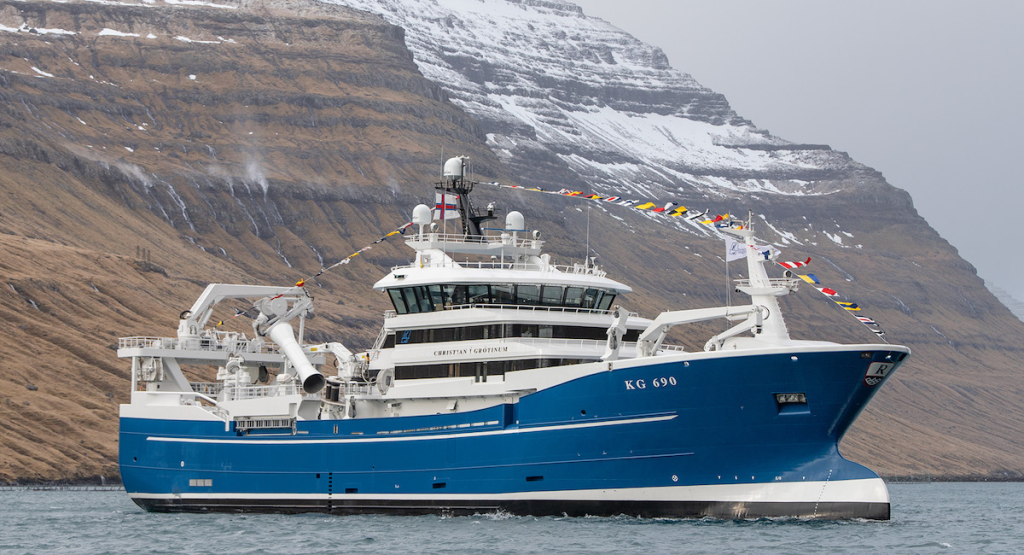
Faroese Fishing Industry Economic Status
To demonstrate how big and important the seafood industry is to the Faroe Islands, seafood exports in 2019 were estimated to be 625,000 tons, to which is worth around 9.5 billion Danish kroner (about €1.3 billion), making Faroe Islands the most seafood producer per capita of any country. Today, with Faroese fisheries and aquaculture combined together make up around 20% of national GDP and employ approximately 15% of the labor force. Seafood items make up 90 to 95 percent of total exports, a number that few countries can match in any industry.
These statistics are more than just economic data numbers, these numbers show how much their waters support livelihoods, public budgets, and rural communities throughout the Faroe Islands. Every new vessel launched, processing facility opened, or trade agreement signed has ripples that extend to daily life in towns.
Major Company Profiles
Behind the aforementioned statistics are the following major companies that produce world-class seafood and hold significant influence in international markets.
Bakkafrost is arguably the most famous. Founded in 1968 located in Glyvrar, it has grown to be one of the world’s largest salmon farming firms, as well as the Faroe Islands’ largest private employer. Being the “most vertically integrated salmon farming company in the world which gives Bakkafrost full control and responsibility over all aspects of production.” (Bakkafrost)
Next is Hiddenfjord, a family-owned salmon producing company, that has also made a name for itself by receiving a four-star BAP (Best Aquaculture Practices) Certified Producer, which is the “first company in the Faroe Islands” to receive such recognition as announced by the GSA (Global Seafood Alliance). Hiddenfjord exports to markets in Europe and North America, emphasizes sustainable methods and high quality.
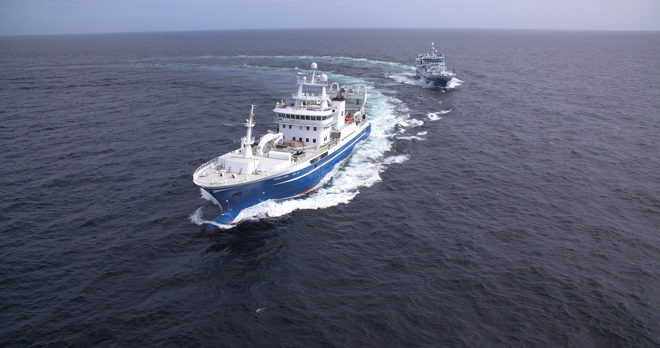
Established in 1985 in the Faroese village of Gøta, Varðin on the other hand, excels in pelagic fisheries due to its sophisticated or high end processing plants and specialty with species that has been the backbone of Faroese capture fisheries which are Atlantic mackerel, herring, and blue whiting.
Next up is the company named Pelagos, a pelagic processor located in Fuglafjørður, which has ownership ties to major fishing and feed industries which strengthens the sector’s integrated value chain, this just shows the Faroese commitment to preserving or maintaining product quality from their seas all the way to markets.
Finally, Framherji, the company that works in fishing, processing, and export, engaging in pelagic, demersal, and shrimp fisheries, as well as active participation in industry partnerships that promote innovation and value-added goods.
These companies are more than just economic contributors; they are a part of a social structure that supports communities, youth employment, and a skilled workforce rich in maritime history.
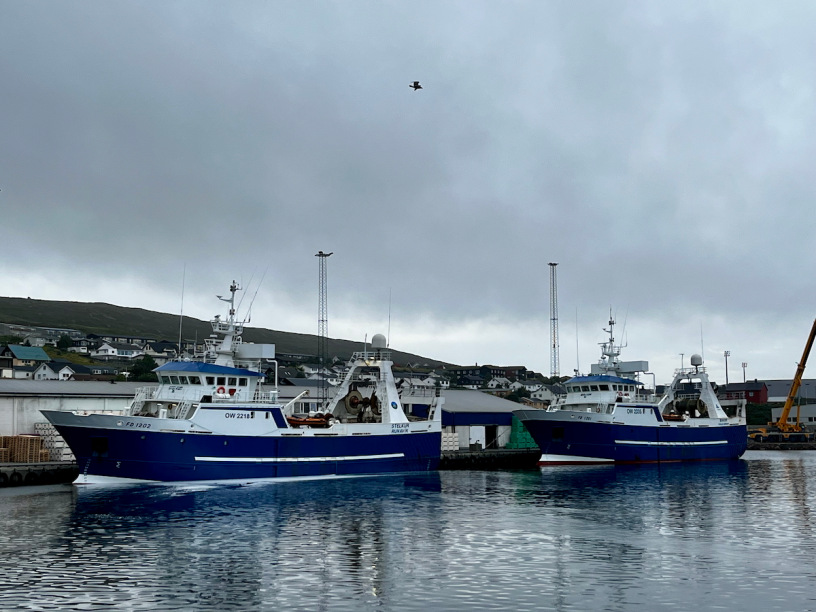
The Country’s Consolidation & Ownership
The country’s fish industry has experienced major consolidation over the past few years. Bigger companies now have control over larger amounts of quota rights and processing capacity, allowing for economies of scale that support global competitiveness. This consolidation was expected considering the capital-intensive nature of modern fishing and aquaculture, all of which require major investment in fleets, technology, and compliance.
Nonetheless, Faroese laws seek to prevent undue concentration, which could affect competition or hinder smaller operators. The country being a part of fisheries reform, the market share and quota concentration limits have been implemented to help ensure that industry ownership remains diverse and accessible.
Major companies in aquaculture, such as Bakkafrost, have broad ownership bases, including international investors, but they remain committed to Faroese governance and production. Consolidation of pelagic and demersal fleets has resulted in efficient operators capable of satisfying global demand, although mechanisms such as public auctions and antitrust restrictions work to keep possibilities for new entrants open.
Challenges
The Faroe Islands’ fishing industry faces ongoing problems that reflect both global and local forces.
Climate change is more likely or might even be the most serious long-term problem the country faces. Changes in ocean temperature affects currents and stock migration patterns which can disrupt the productivity of established fishing grounds, requiring adaptive research and a flexible quota strategy. In addition, rising feed costs and environmental criticism in aquaculture require continuous innovation to keep farming profitable and sustainable.
Geopolitical issues also play a role like traditional agreements, such as quota swaps with Russia, requires regular negotiations on a yearly basis and may be influenced by broader diplomatic views, security concerns, or trade policy adjustments. Recent revisions to these agreements have prompted concerns about future access to important groundfish species.
On the regulatory front, balancing consolidation and competition is a complex task. While efficient enterprises enable the Faroese industry to compete on a worldwide scale, there is public fear that too much market power would marginalize smaller fishers or limit local authority. The continued refining of fishing rights allocation, antitrust limits, and development project quotas strives to keep the system fair and dynamic.
Lastly, the Faroe Islands have labor and demographic issues, just like many other isolated island economies. The industry’s social and economic fabric depends on attracting and keeping competent people in rural areas and making sure that marine expertise is passed down through generations.
Conclusion
The Faroe Islands is an excellent representation of how a small country, both in terms of number of people and land mass, can become an important player in a global industry. The Faroese seafood sector is a true North Atlantic powerhouse, built on centuries of nautical history and powered by modern government, science-based management, and world-class businesses.
From the violent waves crashing onto the islands’ shorelines to the bustling export terminals that deliver Faroese salmon, mackerel, and cod to dinner tables across the world, this shows the country’s resilience, creativity, and a deep love for the ocean. As worldwide demand for sustainable seafood rises, the Faroe Islands, with their unique blend of tradition and innovative leadership, are expected to remain at the forefront of this enduring industry.
Faroese Fishing Industry Economic Status
To demonstrate how big and important the seafood industry is to the Faroe Islands, seafood exports in 2019 were estimated to be 625,000 tons, to which is worth around 9.5 billion Danish kroner (about €1.3 billion), making Faroe Islands the most seafood producer per capita of any country. Today, with Faroese fisheries and aquaculture combined together make up around 20% of national GDP and employ approximately 15% of the labor force. Seafood items make up 90 to 95 percent of total exports, a number that few countries can match in any industry.
These statistics are more than just economic data numbers, these numbers show how much their waters support livelihoods, public budgets, and rural communities throughout the Faroe Islands. Every new vessel launched, processing facility opened, or trade agreement signed has ripples that extend to daily life in towns.
Major Company Profiles
Behind the aforementioned statistics are the following major companies that produce world-class seafood and hold significant influence in international markets.
Bakkafrost is arguably the most famous. Founded in 1968 located in Glyvrar, it has grown to be one of the world’s largest salmon farming firms, as well as the Faroe Islands’ largest private employer. Being the “most vertically integrated salmon farming company in the world which gives Bakkafrost full control and responsibility over all aspects of production.” (Bakkafrost)
Next is Hiddenfjord, a family-owned salmon producing company, that has also made a name for itself by receiving a four-star BAP (Best Aquaculture Practices) Certified Producer, which is the “first company in the Faroe Islands” to receive such recognition as announced by the GSA (Global Seafood Alliance). Hiddenfjord exports to markets in Europe and North America, emphasizes sustainable methods and high quality.
Established in 1985 in the Faroese village of Gøta, Varðin on the other hand, excels in pelagic fisheries due to its sophisticated or high end processing plants and specialty with species that has been the backbone of Faroese capture fisheries which are Atlantic mackerel, herring, and blue whiting.
Next up is the company named Pelagos, a pelagic processor located in Fuglafjørður, which has ownership ties to major fishing and feed industries which strengthens the sector’s integrated value chain, this just shows the Faroese commitment to preserving or maintaining product quality from their seas all the way to markets.
Finally, Framherji, the company that works in fishing, processing, and export, engaging in pelagic, demersal, and shrimp fisheries, as well as active participation in industry partnerships that promote innovation and value-added goods.
These companies are more than just economic contributors; they are a part of a social structure that supports communities, youth employment, and a skilled workforce rich in maritime history.
The Country’s Consolidation & Ownership
The country’s fish industry has experienced major consolidation over the past few years. Bigger companies now have control over larger amounts of quota rights and processing capacity, allowing for economies of scale that support global competitiveness. This consolidation was expected considering the capital-intensive nature of modern fishing and aquaculture, all of which require major investment in fleets, technology, and compliance.
Nonetheless, Faroese laws seek to prevent undue concentration, which could affect competition or hinder smaller operators. The country being a part of fisheries reform, the market share and quota concentration limits have been implemented to help ensure that industry ownership remains diverse and accessible.
Major companies in aquaculture, such as Bakkafrost, have broad ownership bases, including international investors, but they remain committed to Faroese governance and production. Consolidation of pelagic and demersal fleets has resulted in efficient operators capable of satisfying global demand, although mechanisms such as public auctions and antitrust restrictions work to keep possibilities for new entrants open.
Challenges
The Faroe Islands’ fishing industry faces ongoing problems that reflect both global and local forces.
Climate change is more likely or might even be the most serious long-term problem the country faces. Changes in ocean temperature affects currents and stock migration patterns which can disrupt the productivity of established fishing grounds, requiring adaptive research and a flexible quota strategy. In addition, rising feed costs and environmental criticism in aquaculture require continuous innovation to keep farming profitable and sustainable.
Geopolitical issues also play a role like traditional agreements, such as quota swaps with Russia, requires regular negotiations on a yearly basis and may be influenced by broader diplomatic views, security concerns, or trade policy adjustments. Recent revisions to these agreements have prompted concerns about future access to important groundfish species.
On the regulatory front, balancing consolidation and competition is a complex task. While efficient enterprises enable the Faroese industry to compete on a worldwide scale, there is public fear that too much market power would marginalize smaller fishers or limit local authority. The continued refining of fishing rights allocation, antitrust limits, and development project quotas strives to keep the system fair and dynamic.
Lastly, the Faroe Islands have labor and demographic issues, just like many other isolated island economies. The industry’s social and economic fabric depends on attracting and keeping competent people in rural areas and making sure that marine expertise is passed down through generations.
Conclusion
The Faroe Islands is an excellent representation of how a small country, both in terms of number of people and land mass, can become an important player in a global industry. The Faroese seafood sector is a true North Atlantic powerhouse, built on centuries of nautical history and powered by modern government, science-based management, and world-class businesses.
From the violent waves crashing onto the islands’ shorelines to the bustling export terminals that deliver Faroese salmon, mackerel, and cod to dinner tables across the world, this shows the country’s resilience, creativity, and a deep love for the ocean. As worldwide demand for sustainable seafood rises, the Faroe Islands, with their unique blend of tradition and innovative leadership, are expected to remain at the forefront of this enduring industry.
– Shipbroke.is
Comments