
Norway is one of the few countries that has decisively created its identity and place in the world economy from the sea.Imagine a coastline covered in ice and winds so powerful that, hundreds of years ago, the inhabitants practically built their lives around the regularity of the tide and the bounty of the North Atlantic. The history of Norway’s seafood is one of geography and determination, from small coastal fishing communities to an industrial powerhouse that now feeds millions of people worldwide and proudly places “Norwegian seafood” on plates from Warsaw to Washington, D.C.
This article covers that course, including everything from its historical roots and regulatory structures to the present corporate giants, economic impact, and difficulties influencing Norway’s national catch in the future.
How Norway Became a Seafood Powerhouse
For Norwegians, fish was a daily necessity and a means of survival long before it became a worldwide commodity. The story starts with the uncontrolled coastline, deep-rooted fjords, and an ocean that doesn’t freeze during the bitterly cold Arctic winters, which is a natural blessing and the foundation for many generations of fishermen.
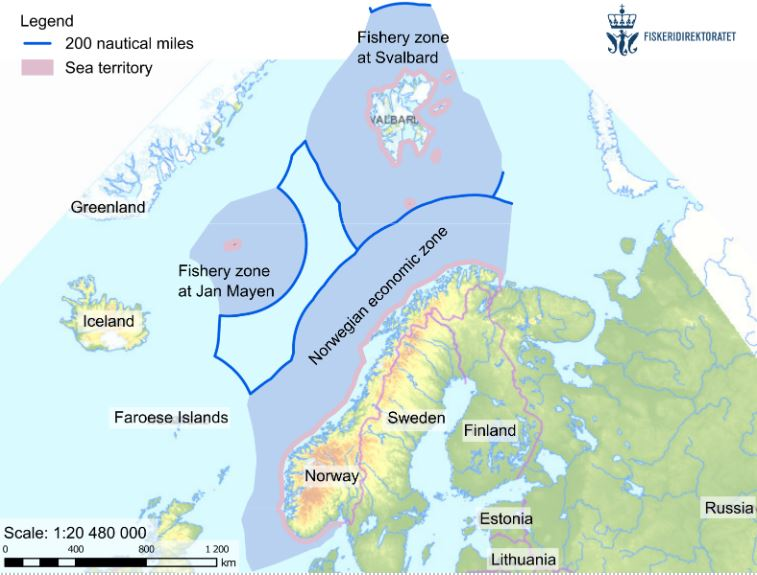
“Fisheries have always been a central component of Norwegian business and industry because Norway controls some of the richest fishing grounds in the world” (fisheries.no). Norway’s location on the North Atlantic guarantees abundant waters that are filled with salmon, herring, cod, and other species. Later generations used these waters for trade and livelihood, just as the Vikings used them for conquest.
“The most important fish stocks migrate between Norwegian and foreign waters and, consequently, good governance requires close cooperation with neighbouring countries” (fisheries.no). Stockfish, or air-dried cod, was one of the first stocks of fish that was exported in the Middle Ages. Nowadays, Norway is currently one of the world’s biggest suppliers of seafood, and with the establishment of governmental organizations like the Norwegian Directorate of Fisheries in 1900, Norway had institutionalized fisheries management by the 20th century, laying the foundation for long-term sustainable control.
However, it took a combination of tradition, science-based management, technical innovation, and planned economic policy to go from coastal sustenance fishing to a major worldwide seafood exporter. Norway is currently one of the biggest exporters and producers of fish worldwide. Its products, whether from aquaculture or wild capture, are staples on global restaurants and grocery store shelves.
Modern Structure and System of Norwegian Seafood Industry
At its core, Norway’s seafood industry is a dual ecosystem of wild capture fisheries and aquaculture. Each operates under distinct, yet interconnected frameworks.
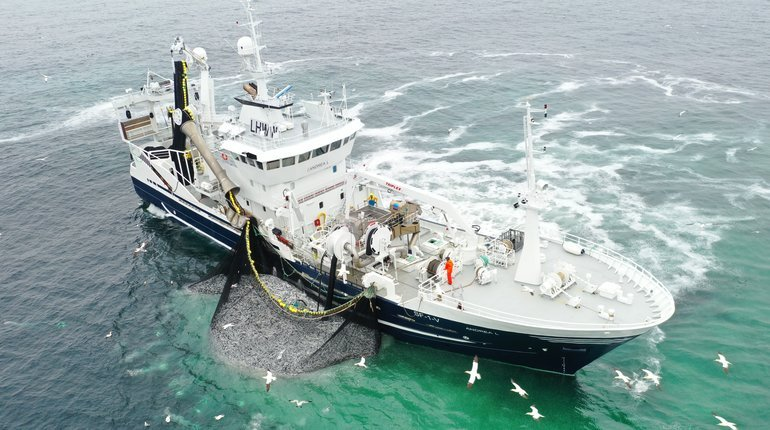
Norway’s coastal villages used to depend primarily on wild fishing, with fleets of trawlers, purse seiners, and longliners capturing fish including cod, haddock, herring, mackerel, and more. These fisheries are managed in a very organized manner:
Regulatory Oversight: The Norwegian Fisheries Monitoring Center, according to the Directorate of Fisheries, “operates as the Directorate’s 24-hour monitoring hub”, carries out, monitors, and enforces policy, while the Ministry of Trade, Industry, and Fisheries is ultimately in charge. This includes authority for quota compliance and at-sea enforcement that are coordinated using strategies like real-time vessel monitoring systems.
Scientific Input: In order to establish quota limitations and guarantee sustainability, Norway’s management is grounded in research and depends on evaluations of stock biomass and reproduction rates.
International Cooperation: Yearly negotiations, like the 2026 treaty with Russia, was considered “crucial for preserving shared resources in the Barents Sea” (reuters), defining total authorized catches (TACs) and allocations because vital stocks, like Northeast Arctic cod, migrate across national borders, striking a balance between economic interests and ecological protection.
Aquaculture
Norway’s largest and economically significant industry is its aquaculture sector, especially salmon farming. Along with species like cod, halibut, mussels, and seaweed, Norwegians created a large-scale farming of Atlantic salmon and rainbow trout due to their perfect water conditions and centuries of interaction with the sea.
Nowadays, the majority of the value of Norwegian seafood exports comes from aquaculture. It combines downstream distribution in international markets with processing and upstream farming.
Quota System, Rules, Transferability, and Species Limits
The quota system, a scientifically based mechanism that controls who can fish how much, where, and when, is one of Norway’s most unique seafood regulations.
How It Works: Norway changed from an open access system to a strictly regulated quota system after major stock losses in the late 1980s and early 1990s, especially in cod. The system distributes portions of the Total Allowable Catch (TAC) to vessels or groups of vessels in place of an open race to fish.
“But producing TACs is not sufficient to secure other important goals, such as efficiency and just distribution” so schemes like the Individual Vessel Quota (IVQ) was introduced, quotas are fixed portions tied to specific boats or fleet sectors based on historical catch levels, vessel size, and fishing methods. In order to prevent consolidation into the hands of a small number of people and preserve rural economic engagement, these quotas are not readily accessible on a market. However, because efficiency gains have occasionally favored larger operators, this structure has changed throughout time and is still up for discussion.
Norway has quotas for a number of important commercial species that are based on both international agreements and scientific evaluations. Cod and Haddock quotas have recently been lowered to rebuild stocks, especially in the Barents Sea, the lowest levels since 1991 were agreed upon for 2026. Quotas for pelagic species, like mackerel and herring, show complex international agreements, shared stock responsibilities and changing market conditions throughout the North Atlantic. Salmon, by contrast, is not regulated through wild capture quotas, instead, aquaculture licenses, biomass restrictions, and stringent environmental laws that regulate everything from site location to fish health and ecosystem effect are used to control the production of farmed salmon. The regulatory system also sets fishing seasons, gear restrictions, and monitoring protocols to ensure proper compliance.
Economic Status: Metrics that Explain Norway’s Seafood Might
In 2023, Norway exported seafood with a record-breaking NOK 172 billion, with salmon alone contributing NOK 122.5 billion, or nearly 71% of the total export value. That amounts to around 39 million meals served daily all across the world, which is a remarkable illustration of Norway’s influence.
Despite market uncertainty, seafood exports once again reached all-time highs in 2024.
Although cod, trout, mackerel, and other fisheries also play important roles, especially in diverse export markets, salmon continues to be the main driver of growth.
In terms of the country’s economy as a whole, seafood is Norway’s second-largest export industry, behind oil and gas. This is a remarkable accomplishment for what many outsiders still consider to be a rural maritime economy.
The Giants of Norwegian Sea Commerce
Norway’s reputation for seafood is solidified by a number of businesses. Here are the biographies of prominent figures influencing the current and future of the sector.
Mowi ASA: Mowi is the world’s largest salmon and trout producer, operating across Norway and multiple continents. Mowi is a prime example of Norway’s aquaculture reach, with a significant portion of the world market for farmed salmon and a completely integrated supply chain from farm to distribution. However, there are without a doubt, obstacles to the company’s success. Weather-related incidents, worries about escaping fish, and environmental pressures draw attention to the conflicts between sustainability and scale. For instance, following a storm-related farm breach in 2025, Mowi said it was “a serious and very regrettable situation”, they offered prizes for escaped salmon, highlighting the operational and ecological dangers associated with industrial aquaculture.
Lerøy Seafood Group: Lerøy, a Bergen-based company founded in the late 19th century, has become a major player in the fish industry worldwide. It has made smart acquisitions to grow its whitefish and distribution businesses globally, and it is currently one of Norway’s biggest exporters of salmon and trout. The demand for high-quality seafood and the perks of vertical integration across farming, processing, and export are both reflected in Lerøy’s 2023 success, which exceeded NOK 30 billion in revenue. “I am proud of the work our employees do, while acknowledging that the past year has been challenging,” says CEO Henning Beltestad.
Aker BioMarine: Despite its small size, Aker BioMarine is a developing business of Norway’s marine economy that is centered on krill harvesting and marine biotechnology. Its products, which range from aquaculture feed additives to krill oil for human nutrition, demonstrate Norway’s transition from traditional fish to marine resources with added value.
Pelagia and Others: Pelagia specializes in pelagic species like mackerel and herring, showing the variety of Norway’s seafood resources and its ability to turn lower-trophic fish into commodities that are exported internationally. Beyond this, a large number of cooperatives and midsized businesses contribute to Norway’s seafood production worldwide, demonstrating a balanced sector with room for innovation and specialization.
Consolidation & Ownership: Who Dominates and Why It Matters
Over the past few decades, there has been considerable consolidation of the Norwegian fish market. Big aquaculture firms like Mowi and Lerøy have invested in international markets and grown both vertically (processing and distribution) and horizontally (more farms, a wider variety of species).
This trend reflects “large differences between what has been allocated and what is the actual catch may increase the demands for adjustments of the allocations keys.” says Bjørn Hersoug from the Norwegian College of Fishery Science in University of Tromsø. In wild capture fisheries, where larger operators frequently have a competitive advantage under systems like the IVQ, it has also sparked questions about quota ownership concentration. “In the end, Norwegian fishers may be satisfied with the present solution; privatizing the gains and socializing the losses!” says Bjørn Hersoug.
These mergers offer Norway the chance to compete on a worldwide scale, but they also raise concerns about the responsibilities of tiny coastal towns and fair access to resources.
Challenges Facing Norway’s Seafood Sector
While Norway’s seafood industry is still performing well on a worldwide scale, it is however confronted with an increasing number of interrelated issues that put its capacity to balance long-term sustainability with economic success to the test.
This revolves around environmental issues, especially in the area of aquaculture, where the effects of fish farming on wild salmon stocks and other marine ecosystems have drawn more attention. River closures and heightened regulatory debates have already resulted from declining wild salmon populations, posing challenging issues for both farmers and legislators over how to increase production without affecting ecological systems.
At the same time, scientific assessments and international negotiations have led to substantial reductions in vital fisheries like cod, often to levels not seen in decades. This puts additional pressure on stock health and quota reductions. Although these cuts are necessary to restore fish supplies and ensure long-term sustainability, they frequently put fishing communities and businesses under short-term financial difficulty.
The situation is further complicated by trade barriers and market volatility, as export values are prone to changes in consumer demand, trade rules, and currency fluctuations. A highly globalized fish supply chain can be easily affected by geopolitical and economic factors outside of Norway’s control, as demonstrated by recent hikes in U.S. customs taxes on Norwegian salmon.
Technological and climate-related pressures, ranging from persistent problems like sea lice in aquaculture to more general climate-driven changes in ocean temperatures, fish migration patterns, and stock distribution, overlay all of this. Together, these factors highlight the fact that Norway’s seafood future will rely not only on sustained efficiency and innovation but also on adaptable management techniques that can respond to environmental change while upholding the confidence of both coastal communities and international markets.
Conclusion: Legacy and Leadership
More than a history of growth in economy, Norway’s development from tiny, weather-beaten fishing towns to one of the world’s most significant seafood nations is a narrative of people who learned how to live together, value, and rely on the sea. Coastal communities have survived some of the worst working conditions on this planet for generations. Creating skills, resiliency, and pride that continue to influence businesses up until today.
The choices that Norway makes these days about sustainable quotas, ethical aquaculture, protecting marine ecosystems and other regulations will determine whether their future generations will have healthy seas or challenging ones. Apart from innovation, humility, long-term thinking, and respect for the natural systems that initially made this accomplishment possible will stay crucial looking forward. If there’s anything that Norway’s history can teach us, it is that stewardship and progress doesn’t have to be in constant conflict. With care, discipline, and continued leadership, Norway is in position to remain not only a global seafood leader, but also a model for how a modern fishing nation can grow without losing its image.
– Shipbroke.is
Comments