
You might think of Norway, Japan, or Canada when we talk about the world’s best seafood producers. These countries mentioned have large if not, huge fishing ships and very busy ports. But only few people outside the marine and fishing industry truly appreciate Greenland, a country located in the waters of the North Atlantic. This big island, which is about the size of Western Europe but only occupies around 57,000 people, has built its economy, culture, and identity around its sea. With its icy waters that are “dominated by shrimps, halibuts, cod, and other high-quality species.” (wikipedia)
Greenland’s fishing industry is not only large by local standards, it defines its economy. Fishing here is both a way of life and a worldwide economy, with family-run dinghies on the fjords and big offshore trawlers that explore freezing waters for weeks.
In this article, we will be talking about Greenland’s unique position in the global seafood industry, how it achieved its status, how the fisheries in the country are managed, who the key players are, and a lot of other factors describing what Greenland’s fishing industry is like.
History: How Greenland Became a Seafood Powerhouse
Before Greenland became known for its abundance in natural resources and geopolitical significance, specifically in its waters, its people relied on the sea. Indigenous communities fished, caught marine animals, and collected shellfish for survival, hence gaining a good knowledge of their very own waters that they roamed for ages. Commercial fishing began in effect in the twentieth century, as European demand for cold-water species increased, “Greenland’s entry into the market of the European Union was in 1972” (wikipedia), coastal communities were catching increasing numbers of cod and other fish for exporting.
After World War II, many things happened that brought Greenland’s fishing industry closer to Denmark’s. Institutions and infrastructure were built to help exports grow at the time. Eventually, fishing became the foundation of Greenland’s economy, and by far its most important economic sector, influencing local governance, trade policy, and international ties.
Greenland’s fishing industry has improved a lot throughout the time, from small-scale coastal harvests to big time modern offshore fleets and global seafood brands. Its waters, which were formerly inaccessible from the world’s markets, are now a transport of prized seafood to Asia, Europe, and the United States.
Modern Seafood Industry: Current System Structure
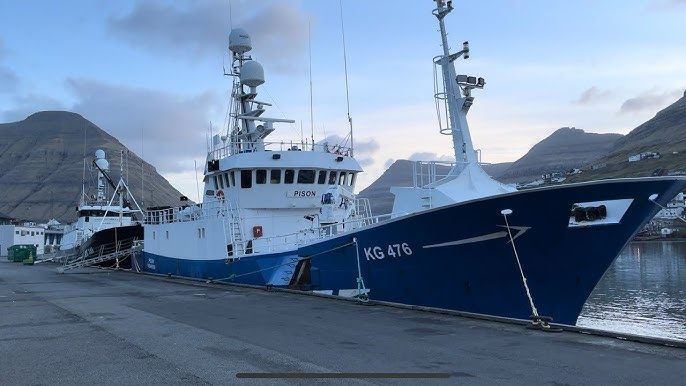
Nowadays, Greenland’s fishing industry is divided into two categories, which are offshore fishing and inshore fishing or known coastal. Offshore fishing, including those large company/factory trawlers, spends weeks at sea catching marine species like the northern shrimp or the Greenland halibut in deeper waters. Inshore fishing are the smaller boats operating near shore, frequently supplying land-based processing companies.
For Greenlandics, fishing is more than just an economic activity, it is a way of life specially for the cities and communities along Greenland’s coastline. In many villages, fishing is the principal source of income and the center of daily life. In reality, more than 4,300 people are directly employed in fishing and allied sectors, accounting for around 15% of overall employment in Greenland, an impressive statistic for a country with a low population.
The species targeted in Greenland’s fisheries distinguishes the ecology of the North Atlantic and Arctic oceans. According to Statistics Greenland, “the industry’s output centers on a few high-value species” including cold-water shrimp, Greenland halibut, Atlantic cod, mackerel, and snow crabs. Greenland exports mostly wild-caught fish, including frozen, fresh, processed, and value-added goods, to global markets.
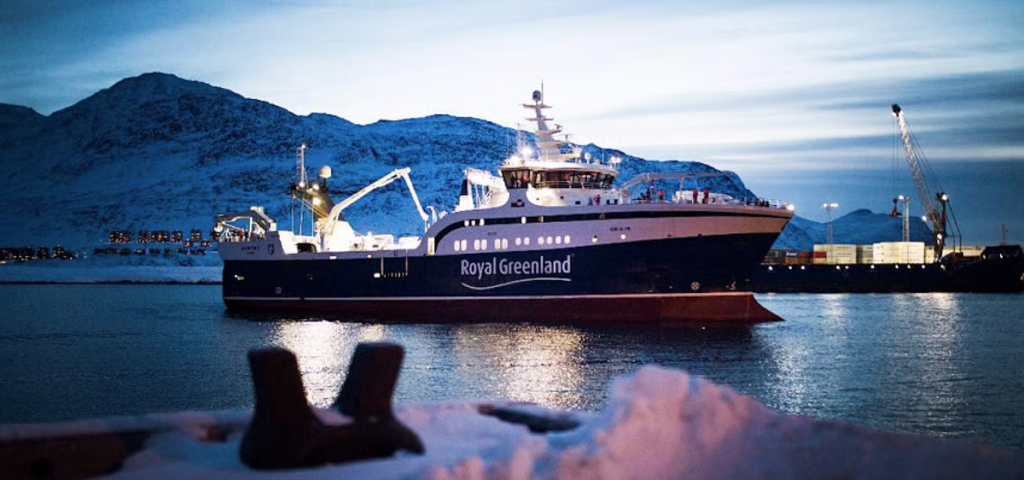
Greenland’s fish industry is currently dominated by two large companies which are Royal Greenland A/S (state-owned), and Polar fish (private). Along with these, a rising network of smaller companies and independent fishermen helps to create a diverse yet carefully managed business.
Quota System: Transferability, Species Composition, Restrictions
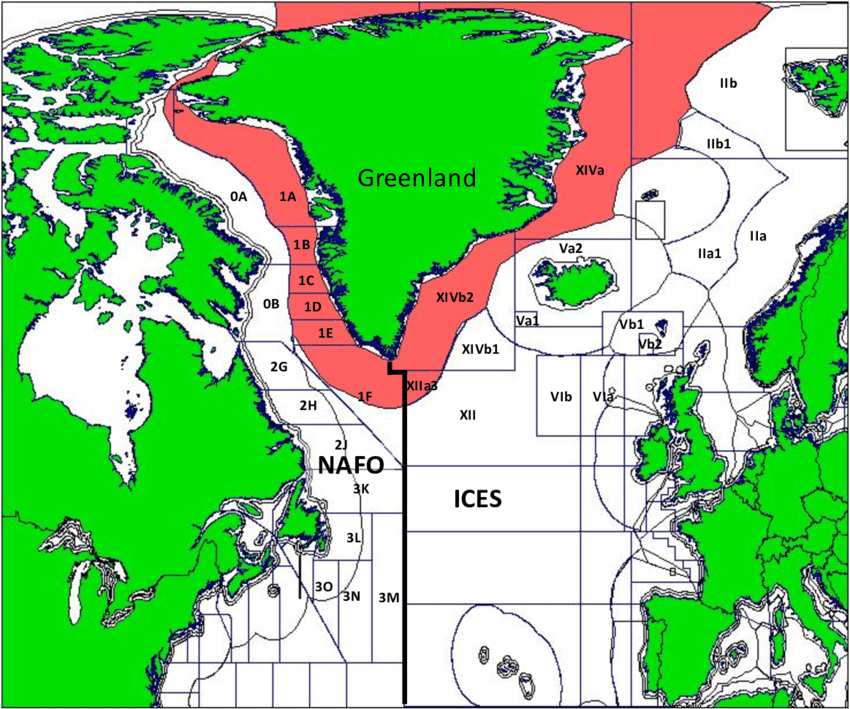
Greenland’s fish stocks are being sustained by using a quota system that limits total allowable catches (TACs) for individual species of marine animals or fishes. These quotas are implemented based on scientific advice, frequently in cooperation with large organizations like the Northwest Atlantic Fisheries Organization (NAFO), and are updated on a regular basis to balance sustainability and economic needs.
Shrimp quotas, for example, have been cut in recent years due to evidence of decrease in stock, “recommended catches dropped from 115,000 to 95,000 tons due to declining shrimp stocks. Greenland’s TAC followed this trend, falling to 83,125 tons in 2025” (Fish Break). The goal was to avoid sudden changes, instead, they were trying to smooth out quota changes to protect fishing communities from economic shocks.
The country also implemented a new operation system for harvesting Greenland halibut in 2025, the country applied individual transferable quotas or known as ITQs, in deep-sea fisheries. This transition aims to create clear fishing rights and align incentives for sustainable harvesting. According to Fish Break, the quota allocation remains political. Greenland’s TAC was divided between Polar Seafood, Royal Greenland, Qaleralik and Sigguk, alongside an auction pool.
As of 2024, commercial fishing companies will have to be based in Greenland, and shoreline fishing rights will be raised from three to twelve miles offshore. These changes will happen gradually over ten years. The country had also set a minimum price for some species and formalized transferable species quotas, resulting in a much more organized market for quota rights in Greenland’s fisheries.
These methods carefully balance keeping fish stocks healthy over the long term, protecting the jobs of coastal towns, and keeping Greenland competitive in the world market for seafood.
Economic Status: Simple Metrics to Visualize & Explain
To understand Greenland’s economy, imagine a country where fish and shellfish account for nearly all export revenue. Seafood alone accounts for over 90% of Greenland’s merchandise exports by value, with exports just this recent year totaling around DKK 4-5.5 billion from January to October 2025, says undercurrentnews.
In terms of contribution to national output, fishing accounts for around 23% of Greenland’s GDP, a staggering figure for one industry.
Shrimp and halibut are most of the time, the top export species, but Atlantic cod has shown as a strong growth area, balancing weaker performance in other categories. For example, cod exports in 2025 were estimated to be about 70% greater than the previous year, resulting in both a probable increase in volume and price.
These numbers are supported by thousands of individual fishermen, hundreds of vessels, and dozens of processing facilities combined into local communities along Greenland’s coast, ranging from Ilulissat in the west to Tasiilaq in the east. Fishing to these communities has an economic influence that extends beyond even in the macro level, locally, fishing jobs support rural economies and provide for many families in areas where other employment opportunities are low.
Large Companies in Greenland’s Seafood Industry
Royal Greenland A/S
Royal Greenland, the country’s most well-known and largely acknowledged seafood company, it was founded in 1774 by the Danish crown as a trade department for Arctic commerce. Over generations, it grew into a vertically integrated huge seafood company that is completely owned by the Greenlandic government, with fishing, processing, and marketing facilities spread around the globe.
Royal Greenland’s fleet, factories, and products show its desire to connect Greenlandic coastal towns to global and/or international markets. The company relies heavily on cold-water shrimp, Greenland halibut, cod, and snow crab to gain revenue. The company owns and operates “40 landing and processing facilities in Greenland, Canada and Europe” , World Benchmarking Alliance says, and “its sales and distribution networks are set up in various locations throughout Europe, North America and Asia.”
Royal Greenland had mixed financial performance in the past recent years, with difficult fishing situations in early 2025, reducing earnings and requiring strategy changes. The company’s profitability measures improved in the first half of the year, and still they continue to invest in fleet modernization and product development.
Royal Greenland’s mission goes beyond business, it focuses on sustainable fishing practices, marine ecosystem conservation, and community development. “It will focus on creating a more targeted and simplified business model that reduces complexity and supports Royal Greenland’s ability to navigate in a volatile global context,” the company said.
Polar Seafood
Polar Seafood, despite being smaller than Royal Greenland, is still considered as an important private voice in Greenland’s fishing business. Polar Seafood started with a strong focus on operating in Greenlandic waters. It runs its own processing facilities and participates directly in export markets. This helps to diversify ownership and operations in a sector that was previously controlled by a single state-owned company.
Over the past decade, smaller processors and fish purchasers have developed, indicating a growing market outside the traditional dominance of a single state-owned enterprises.
Polar Seafood’s presence matters not because it rivals Royal Greenland in scale, but because it introduces competition, alternative procurement channels, and commercial flexibility into the system These enterprises work together to build an industrial network that connects Greenlandic fishermen to consumers all over the world.
Consolidation and Ownership – Who Controls Quota Holdings?
Historically, quota ownership in Greenland has favored larger enterprises and established fleets, particularly those related to Royal Greenland’s operations. But new rules and changes to quotas are meant to make access more open and fair for everyone who wants quota rights.
According to Fish Break, the new laws that were implemented limit the “annual quota trading to 10% per company, and no single owner can hold more than 20% of West Greenland’s shrimp quota.”
These rules help protect small businesses and keep quota ownership from becoming too concentrated. As quota transfers and sales become more controlled, individual fishermen and coastal businesses, particularly those that has larger processors, will have more options to participate in the resource economy.
Nonetheless, Royal Greenland’s size and network provide them a leading position in processing, export, and quota usage. The corporation remains Greenland’s largest employer and single largest fisheries enterprise.
Challenges Facing Greenland’s Seafood Sector
Greenland’s fishing industry is mostly dependent on global demand, even so, it faces a number of major challenges. Climate change is causing problems such as unstable ice formations and shifting ocean temperatures that have affected fishing patterns for species like halibut and shrimp, impacting harvest rates and seasonal timing which poses challenges to both inshore and offshore fleets.
Even stock sustainability remains a concern. Scientific advice has resulted in quota reductions for some species, according to Fish Break, “in 2023, scientists advised a cut of almost 19%, citing weak data. Greenland reduced the TAC by only 9%.” Resulting in keeping their quotas higher than suggested advice, raising concerns about long-term ecological balance.
Market instability, which includes shifting prices and changing demand in major import markets, adds to economic risk. Together with Greenland’s logistical challenges (high shipping costs and remote infrastructure), these pressures need careful management and flexible policy responses.
Even big companies like Royal Greenland were no exception, as they remained vulnerable to these challenges. However, according to seafoodsource, “despite the lower revenue and challenging conditions, the company’s EBITDA, EBIT, and profit before tax all improved in prior years.” having better earnings and profit in H1 2025.
Greenland’s government intends to enhance local ownership and value-added processing, which raises concerns about economic diversification generally. Greenland’s reliance on seafood exports may make it vulnerable to external factors unless it is a different industry, like tourism, minerals, and services are expanded alongside fishing.
Final Remarks on Greenland’s Fishing Industry
Greenland’s transformation from isolated Arctic communities to a global fisheries powerhouse is an underrated North Atlantic success story. Its fishing industry does not only support the national economy, but it also supports other facets of economy like cultures, communities, and livelihoods throughout the vast and beautiful landscapes of the country.
Despite Greenland having numerous challenges, the country still stands its ground facing these conflicts. The country’s top officials, major corporations, and even small fishermen all deal with the aforementioned challenges with no exceptions. As the industry develops with their new rules, enhanced fleets, and growing markets, Greenland’s seafood industry still remains an international seafood trade foundation, powered by resilience, creativity, and a deep connection to the sea.
Comments